Invited speakers

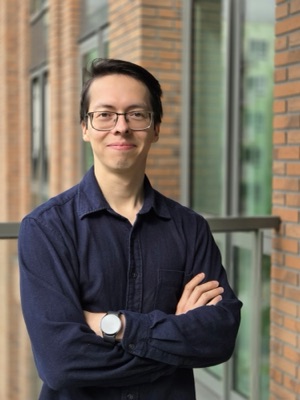
Jan-Christoph Kalo
University of Amsterdam
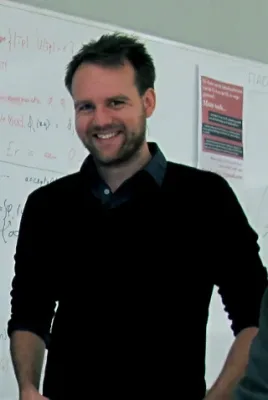
Kubilay Atasu
Delft University of Technology
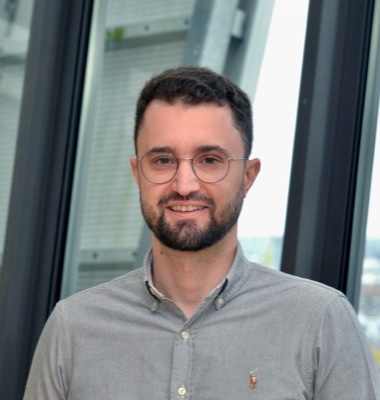
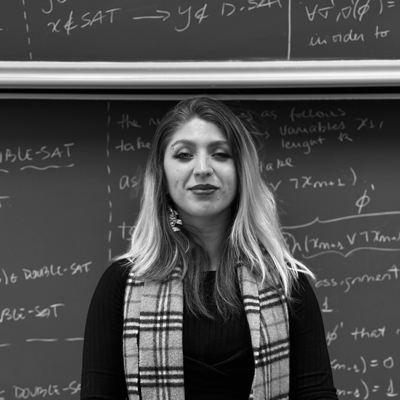
Christopher Morris
RWTH Aachen University
Many real-world phenomena can be naturally represented as graphs, including social networks, biological systems, transaction networks, and knowledge bases. Learning and reasoning over graphs have enabled advances in applications such as drug discovery, fraud detection, recommender systems, and scientific discovery.
This workshop brings together researchers and practitioners working on graph-based AI across foundations and applications. The 3-hour session features invited talks and an interactive poster session with extended abstracts, with the goal of fostering discussion and collaboration between research and applications of these topics in the Benelux region and beyond.
University of Amsterdam
Delft University of Technology
RWTH Aachen University
Welcome and introduction by the organizers
Explicit Knowledge Models
Financial Crime Detection: Decentralization, Privacy, Robustness, and Utility
Shervin Mehryar
Fatemeh Gholamzadeh Nasrabadi, Alireza Khayatian, Michael Werner, and Marcel Worring
Halil Cagri Bilgi and Kubilay Atasu
Ramon Rico, Ioana Hulpus, Stan Leisink, Boyang Zhao, and Yannis Velegrakis
Which Algorithms can Graph Neural Networks Learn?
The following extended abstracts will be presented during the poster session.
Shervin Mehryar
Fatemeh Gholamzadeh Nasrabadi, Alireza Khayatian, Michael Werner, and Marcel Worring
Halil Cagri Bilgi and Kubilay Atasu
Ramon Rico, Ioana Hulpus, Stan Leisink, Boyang Zhao, and Yannis Velegrakis
We invite extended abstracts on learning and reasoning with graphs, spanning foundational methods and real-world applications, to be presented during the poster session.
Authors are invited to submit an extended abstract of up to 2 pages (excluding references) using the Springer Lecture Notes in Computer Science (LNCS) template. The template is available on Overleaf.
Submissions will be lightly reviewed for relevance to the workshop, and they may describe previously published work, work in progress, or ongoing research.
Attendance requires registration for BNAIC/BeNeLearn 2026.